How to Find Cheap Flights: 9 Things That Actually Work (and 3 That Don’t)
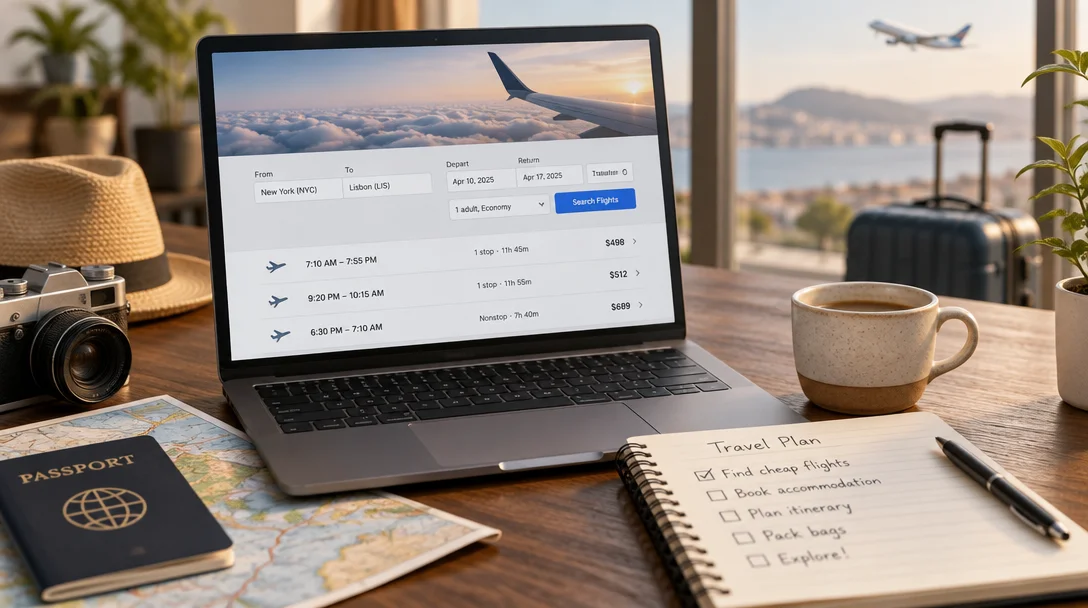
Be flexible with dates, set price alerts, search one-ways and nearby airports, book domestic 1-3 months and international 2-6 months out, and use card perks. Skip the Tuesday-booking and incognito myths.
Nobody sets out to overpay for a flight. It just kind of happens, one rushed checkout at 11 p.m., three weeks before the trip, when the fare finally looks tolerable and you hit Book before it changes its mind. The good news: paying less is less about secret hacks and more about a handful of habits. Here are the ones that actually move the needle.
Quick answer
The cheapest fares usually go to flexible travelers: shift your dates a few days (Tuesday through Thursday departures are often the cheapest domestically), set price alerts instead of refreshing endlessly, and book domestic trips roughly one to two months out and international trips two to six months out. Searching one-way fares separately, comparing nearby airports, and using credit card points at solid rates can each shave another layer off the total.
Be flexible with dates (even a little)
Airfare pricing is built around demand, not distance. The same route can differ by a third between a Friday and the following Tuesday. Two tools make this painless: Google Flights’ date grid and price calendar show the cheapest day within a whole month, and Kayak’s flexible-dates search compares plus or minus three days around your chosen dates automatically.
The rule of thumb from fare data: midweek departures, especially Tuesdays and Wednesdays, tend to be cheaper than Sundays, and avoiding peak school-holiday weeks matters more than any booking-day superstition.
Use price alerts instead of refreshing
Checking prices daily does nothing except stress you out, and fares don’t respond to your browser history. What actually works is an alert: Google Flights and Kayak both let you track a route and email you when the price moves. Set it a few months out, wait for a real dip, then book quickly when it comes, since sale fares on competitive routes rarely linger.
Search one-way, and try nearby airports
Booking two one-ways, sometimes even on different airlines, is regularly cheaper than the round trip, and it makes delays and cancellations less of a domino effect. It also frees you to mix a budget carrier into one leg where it makes sense. The same logic applies to airports: if you’re within reach of two or three airports (or two cities, for a wider net), search all of them. The fare difference between, say, a major hub and a secondary airport an hour away can easily cover a train ticket.
When to actually book
Fare studies keep landing in the same neighborhood: for domestic flights, the sweet spot is commonly around one to three months before departure, with average prices bottoming out roughly 44 to 71 days out on many routes. International trips want more runway, generally two to six months. Book much later than that and you’re paying the walk-up premium; book a year out and you often miss sales entirely, because airlines start pricing those seats conservatively.
Where the ‘book on Tuesday’ myth comes from
Old advice from the days when airlines loaded fares manually once a week. Today pricing updates continuously, so the day you click buy matters far less than the day you fly. Incognito browsing doesn’t help either, since fares are driven by route demand and booking class availability, not your cookies.
Let tools watch the price after you book
Google Flights has a price guarantee badge on some itineraries: if the fare drops before departure, Google refunds the difference via Google Pay (payouts over $5, US flights only, certain limits apply). Many US airlines also have no-change-fee policies on standard economy fares, so if the same flight drops after you book, you can often rebook at the lower fare and pocket the difference as a travel credit. A quick check a week after booking is worth the two minutes.
Card points and perks that quietly pay
Points can be worth far more than a penny each. Sapphire Reserve points redeemed through the Chase travel portal were historically worth 1.5 cents, now moving to a Points Boost model, and Amex Platinum Membership Rewards points transferred to airline partners often beat cash prices on premium cabins. Two more perks people forget: several premium cards (Amex Platinum among them) reimburse the Global Entry or TSA PreCheck application fee every four years, and many airport-lounge and checked-bag benefits effectively erase fees you’d otherwise pay on every trip. None of this is a reason to carry a card you don’t want, but if you already hold one, use what’s in the drawer.
Watch out for the traps
A few “deals” cost more than they save. Basic economy fares often lose carry-on privileges, seat selection, and even earn nothing in miles, so the $30 saving evaporates at the gate. Third-party booking sites can offer marginal discounts with painful rebooking support when things go wrong; if the price is within a few dollars, book with the airline directly. And error fares, while occasionally real, usually get honored only when booked straight with the airline and are often canceled with little recourse.
One habit to build
Pick a route, set one alert, and give it a few weeks before committing. Flexibility with dates plus patience with alerts does most of the work. The Tuesday-morning hack was never doing that for you.